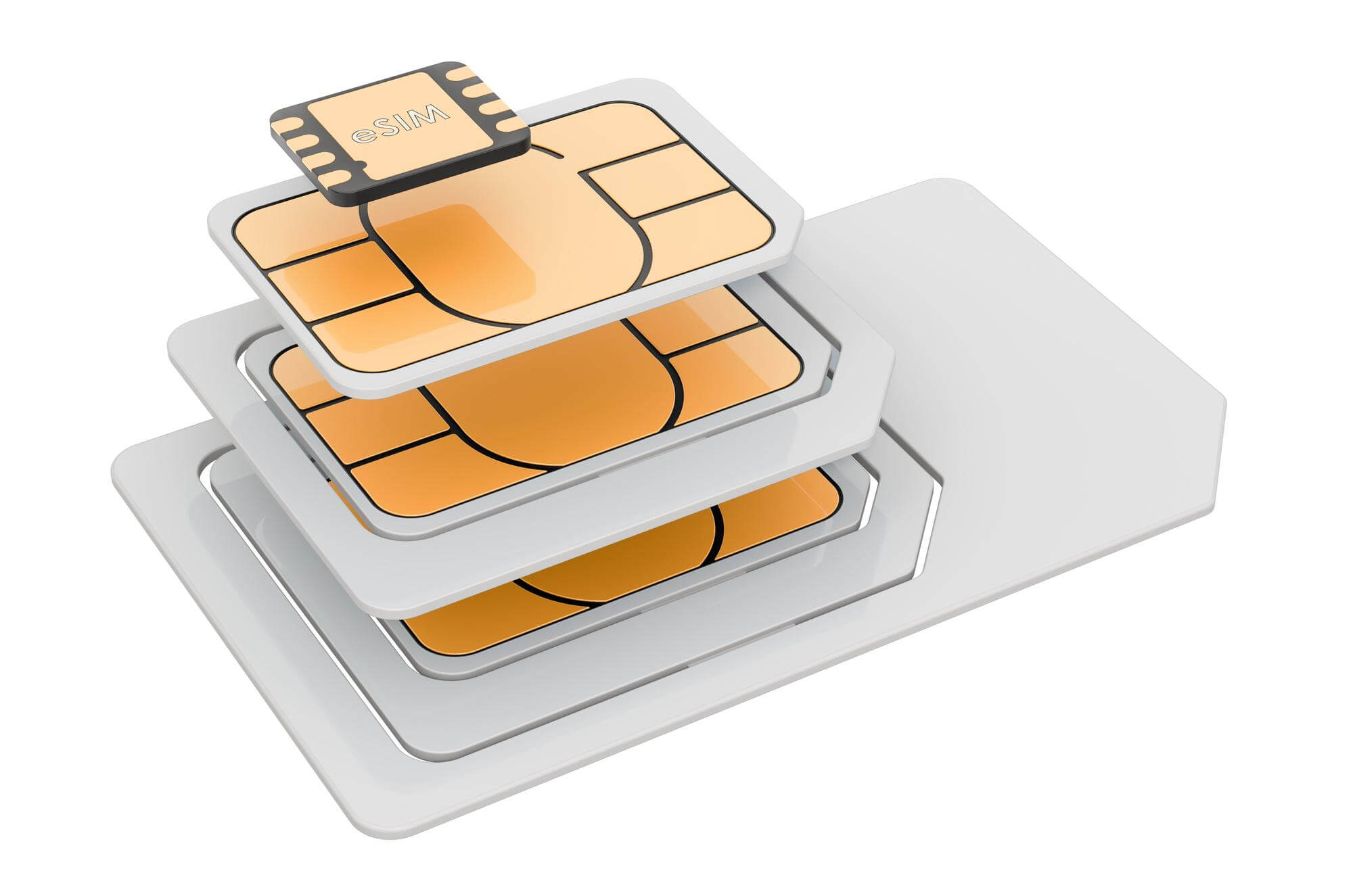
Everything You Need to Know About eSIM IoT, Why GSMA SGP.32 Was Created, Its Specs, Benefits, and What It Means for Your Business.
The Evolution of Connectivity & the Rise of eSIM
The SIM card has been the cornerstone of mobile connectivity for decades. Traditionally, SIMs were physical cards that needed to be manually inserted and carefully managed per device. But as the world moved toward massive, pervasive connectivity, especially with the rise of IoT (Internet of Things), this old model couldn’t scale:
- IoT devices are often deployed in hard-to-reach, constrained environments.
- Many devices have no user interface (no screen, no buttons).
- Remote management and global scalability demand new architecture.
Enter the eSIM (Embedded SIM/eUICC), a software-driven, remotely programmable SIM that reimagines connectivity for the digital era. eSIM enables over-the-air provisioning, profile management, network switching, and centralized control without a physical SIM swap.
Comparison of GSMA eSIM Specifications
| Specification | Primary Use Case | Provisioning Model | Key Limitations |
| SGP.02 | M2M / Early IoT | Operator-driven (SMS-based) | Heavy, complex, not optimized for scale |
| SGP.22 | Consumer devices (phones, tablets) | User-initiated (QR / pull model) | Requires UI & human interaction |
| SGP.32 | IoT (massive, industrial, low-power) | Remote, automated (push model) | New ecosystem adoption underway |
Key takeaway: SGP.32 is the first specification designed exclusively for IoT realities.
What Is eSIM Technology?
eSIM (Embedded SIM) refers to a programmable SIM built into a device via the eUICC (embedded Universal Integrated Circuit Card) technology. Unlike traditional SIMs:
- It’s soldered into the device (often in MFF2/embedded form).
- It supports multiple profiles from different operators.
- It allows remote activation, switching, and lifecycle management.
This makes eSIM ideal for IoT devices, which often run unattended in the field (e.g., smart meters, trackers, industrial sensors).
How Did eSIM Come to Exist? The Genesis
The eSIM ecosystem evolved through GSMA standards, which provided universal frameworks for remote provisioning:
- SGP.02/01 (M2M) – early eSIM specification for machine-to-machine (M2M) applications; robust but complex and heavy.
- SGP.21/SGP.22 (Consumer) – eSIM architecture/spec for smartphones and wearables; enabled user-driven profile activation but assumes user interaction.
- SGP.31 & the new SGP.32 (IoT) – purpose-built specifications for IoT devices, especially for constrained or “headless” environments without UIs.
Why a New IoT eSIM Specification Was Needed
Consumer eSIM specs assumed there was a user (for QR codes or device UI interaction). M2M specs were suited for legacy telecom stacks and not optimized for constrained IoT devices in massive global fleets. Earlier standards worked, but not well enough, for modern IoT.
Challenges with Previous Specs
- SMS-dependent workflows
- High signaling overhead
- Manual provisioning steps
- Poor fit for NB-IoT / LTE-M devices
- Limited automation at fleet scale
IoT needed a standard that supports:
- Zero-touch provisioning
- Constrained devices
- Massive scale
- Policy-driven connectivity changes
This need is what led GSMA to define SGP.31 (architecture & requirements) and SGP.32 (technical specification).
What Are the GSMA eSIM Standards?
| Standard | Year | Target Use Case |
|---|---|---|
| SGP.02/01 (M2M) | 2014–15 | Early machine-to-machine IoT, heavier and SMS-dependent |
| SGP.21/22 (Consumer) | 2016–23 | Smartphones, tablets — user-initiated profile downloads |
| SGP.31 (Architecture IoT) | 2022–24 | Defines architecture and requirements for IoT RSP |
| SGP.32 (Technical IoT) | 2023–24 | Defines detailed technical spec for IoT remote provisioning |
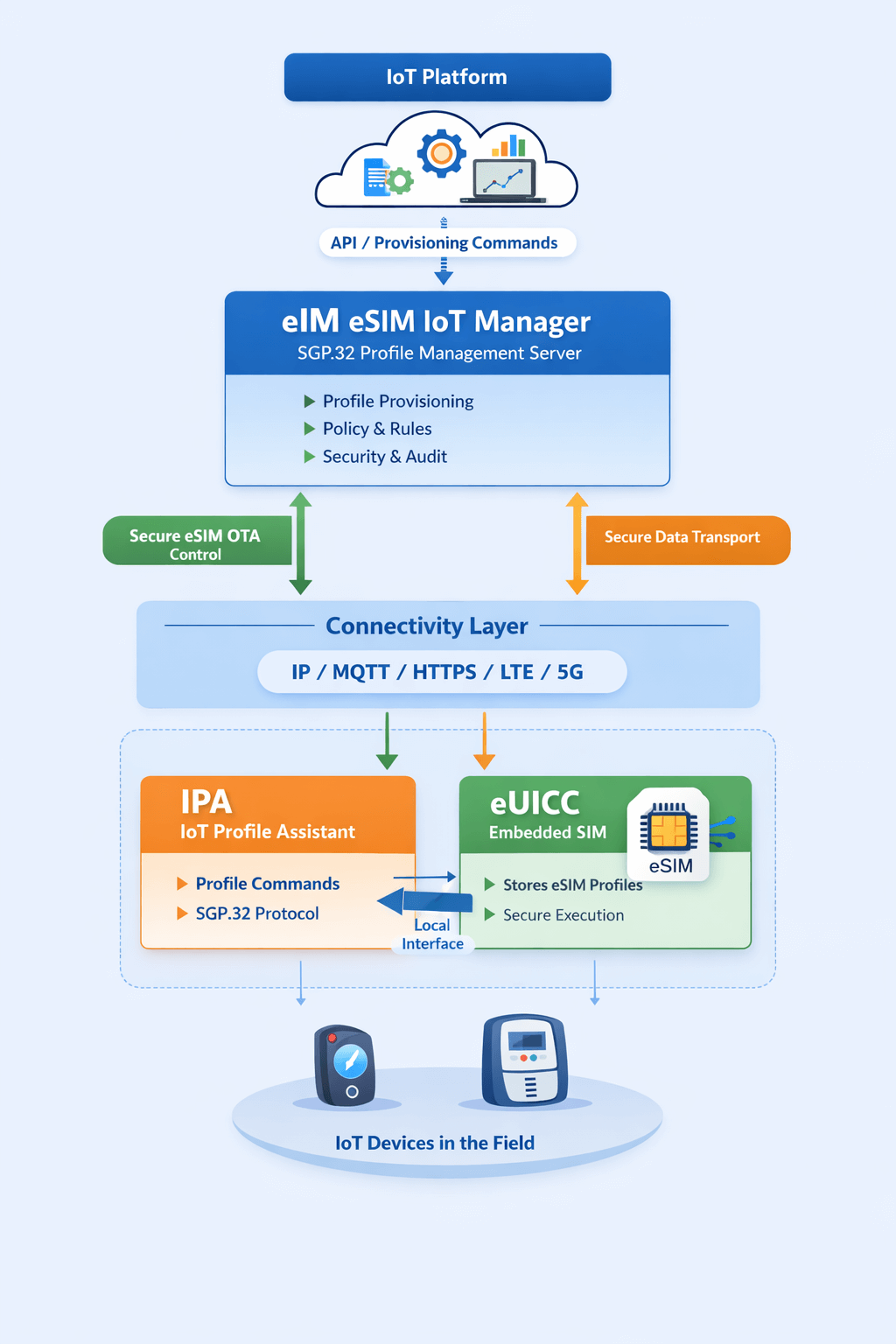
SGP.32 works in tandem with SGP.31, where:
- SGP.31 lays out architecture & requirements.
- SGP.32 is the technical implementation spec detailing protocols, interfaces, and security.
What Is GSMA SGP.32: eSIM IoT?
GSMA SGP.32 is the technical specification that defines how eSIM provisioning, profile lifecycle, and remote management are handled in network- or user interface-constrained IoT devices. It enables:
- Secure, OTA profile provisioning
- Automated lifecycle management
- Remote profile switching without user interaction
- Optimized operation for low-power devices
Aligned with the architectural blueprint in SGP.31, SGP.32 enables global interoperability across IoT ecosystems.
How SGP.32 Works: Key Architecture Components
- IoT Profile Assistant (IPA)
The IPA replaces the consumer Local Profile Assistant (LPA). IPA acts as the intermediary between the eSIM IoT Manager and the device eUICC. It may operate:
- IPAe — inside the eUICC
- IPAd — in the device/firmware
- eSIM IoT Remote Manager (eIM)
The eIM is the central control plane in SGP.32:
- Push-based provisioning: unlike consumer ‘pull’, the eIM can push profile updates OTA with no user action needed.
- Enables remote profile switching based on policies or network conditions.
- Facilitates automation and fleet-wide SIM lifecycle operations.
- Lightweight Protocols & IP-based Connectivity
SGP.32 moves away from SMS-based triggers and heavy mechanisms and supports:
- Modern IP-based communication channels.
- Efficient, low-power protocols suitable for NB-IoT and LTE-M.
- Security & Interoperability
The spec defines strong mutual authentication and secure provisioning channels. It reuses SM-DP+ from consumer specs, allowing interoperability across operators and provisioning platforms.
Why SGP.32 Matters
🔹 Optimized for IoT Scale
SGP.32 is designed for headless devices, where there’s no screen or user input. This enables OTA provisioning that works on low-power or intermittent networks.
🔹 Full Remote Control
Profiles can be downloaded, updated, disabled, and deleted without physical intervention. This dramatically reduces operational costs and field visits.
🔹 Global Interoperability
Standardization avoids proprietary solutions and enables devices to work across carriers and geographies with a single SKU.
🔹 Supports Advanced Use Cases
Whether tracking assets globally, managing utility meters, or enabling 5G IoT systems, SGP.32 provides the foundation for robust, scalable connectivity.
SGP.32 Technical Specifications & Features
SGP.32 defines:
- Lightweight OTA profile provisioning protocols
- Server-controlled lifecycle services
- Security mechanisms for profile integrity and authentication
- Interfaces between IPA, eIM, and the device
- Compatibility models with SGP.31 architecture
It replaces the older need for SMS or heavy server constructs (such as SM-SR) with a modern, scalable, flexible ecosystem.
Why Businesses Should Care
- Flexibility & Cost Savings
Remote provisioning and network switching reduce device maintenance costs and eliminate manual SIM swaps.
- Global Device Deployments
With a single SKU and eSIM, enterprises can ship globally and set connectivity remotely based on region, coverage, or regulatory requirements.
- Future-Proof 5G IoT
As IoT scales across 5G networks, SGP.32 provides a standardized framework to support next-gen IoT use cases without fragmentation.
- Security & Compliance
Built-in security and authenticated provisioning protect devices and networks in distributed deployments.
The Role of eSIM Standards in 5G & IoT
In the 5G era, where IoT applications demand ultra-reliable, low-latency, and highly scalable connectivity, eSIM standards:
- Provide unified device onboarding
- Enable seamless nationwide/global connectivity
- Support fleet-wide updates & security patches
- Facilitate edge/cloud connectivity innovations
SGP.32 ensures IoT deployments can evolve with 5G technologies and carrier ecosystems without redesigning hardware.
Advantages of GSMA SGP.32 for IoT
| Benefit | Description |
|---|---|
| Remote OTA Provisioning | Download and manage profiles without field visits |
| Scalability | Supports millions of devices across regions |
| Device Autonomy | Works on devices with no UI |
| Operator Independence | Enables carrier switching & roaming flexibility |
| Security | Standardized secure profile lifecycle management |
SGP.32’s Impact on the Industry
Industry adoption is underway, with major IoT operators preparing to launch SGP.32-compliant offerings starting in 2026. Standardization is expected to:
- Reduce vendor lock-in
- Simplify multi-carrier support
- Enhance global fleet performance
- Lower cost of ownership and deployment complexity
Choosing an eSIM IoT Solution: What to Look For
When evaluating eSIM IoT platforms:
- Standards Compliance
Ensure SGP.31/32 support and test suite (SGP.33) certification readiness.
- Scalability
Ability to manage large deployments, OTA provisioning, and network switching.
- Redundancy & Failover
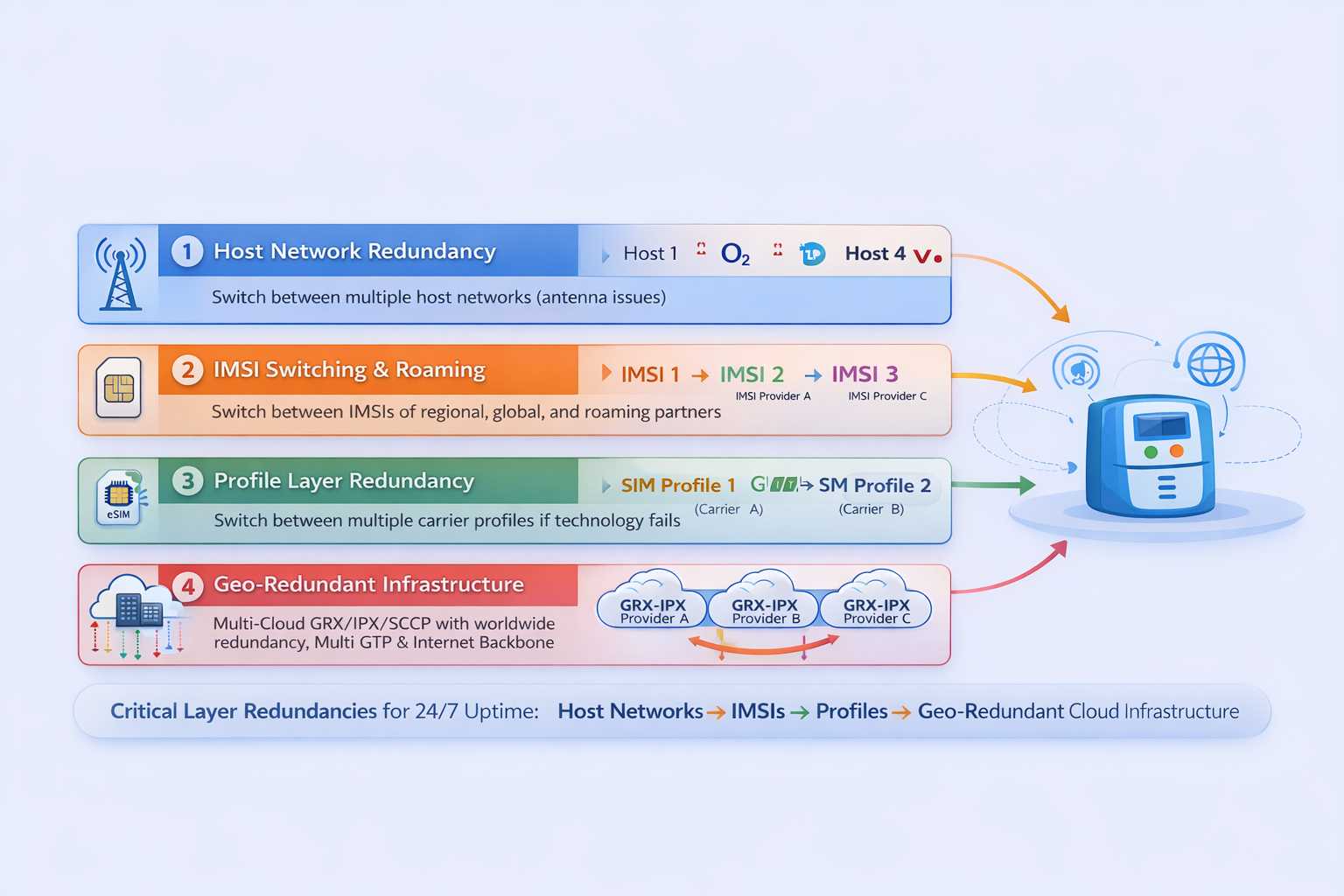
Platforms should offer robust connectivity layers:
- Layer 1 — Host network switching
- Layer 2 — IMSI or roaming fallback
- Layer 3 — Profile switching across carriers
- Layer 4 — Geo-redundant infrastructure with multi-GRX/IPX and redundant GTP routing
These layers ensure continuous connectivity even in adverse conditions.
Fidelitel IoT Connectivity Platform & SGP.32 Readiness
At Fidelitel, we’ve architected our IoT connectivity platform with future-ready capabilities:
- Continuous Data Connectivity
Our platform supports:
- Centralized eSIM lifecycle management
- Remote OTA provisioning & carrier switching
- Standards-aligned interfaces for SGP.31/32 IoT devices
- Intelligent orchestration for global deployments
- Redundancy & Failover Architecture
Fidelitel’s infrastructure ensures resilient connectivity with:
- Network Layer Flexibility — Multi-host network support
- IMSI & Roaming Fallback — Dynamic IMSI assignment
- Profile Layer Switching — Seamless carrier transitions
- Geo-Redundancy — Distributed routing via multi-GRX/IPX for high availability
This means even in network outages, roaming failures, or profile issues, your IoT fleets stay connected and managed.
- Enterprise-Level Control
Full lifecycle visibility, analytics, and automated workflows help you optimize deployments over time.
GSMA eSIM Specification Comparison
SGP.02 vs SGP.22 vs SGP.32
| Category | SGP.02 (M2M eSIM) | SGP.22 (Consumer eSIM) | SGP.32 (IoT eSIM) |
|---|---|---|---|
| Primary Use Case | Traditional M2M deployments | Smartphones, wearables | Large-scale IoT deployments |
| Target Devices | Industrial routers, gateways | Phones, tablets, watches | Sensors, trackers, meters |
| User Interface Required | ❌ No | ✅ Yes (QR code / UI) | ❌ No (headless devices) |
| Designed for IoT Scale | ⚠️ Limited | ❌ No | ✅ Yes |
| Provisioning Model | Operator-centric | User-driven | Platform / enterprise-driven |
| Key Control Entity | SM-SR / SM-DP | SM-DP+ | eIM (eSIM IoT Manager) |
| On-Device Agent | M2M eUICC logic | LPA (Local Profile Assistant) | IPA (IoT Profile Assistant) |
| Remote Provisioning | ✅ Yes | ✅ Yes | ✅ Yes (optimized) |
| OTA Optimization for Low Bandwidth | ❌ No | ❌ No | ✅ Yes |
| Profile Switching | Manual / complex | User initiated | Automated / policy-driven |
| Security Model | Strong but heavy | Strong | Strong + lightweight |
| Multi-Carrier Support | Limited | Consumer roaming | Native global IoT support |
| Operational Complexity | High | Medium | Low |
| Cost Efficiency at Scale | ❌ Poor | ❌ Poor | ✅ Excellent |
| Future 5G IoT Alignment | ❌ Legacy | ⚠️ Partial | ✅ Native |
| GSMA Status | Legacy (still in use) | Active | Strategic Future Standard |
Why SGP.32 Is a Big Deal for IoT
The IoT landscape is rapidly evolving, and eSIM technology, especially GSMA SGP.32, provides the foundation for the next generation of scalable, secure, and automated connectivity.
From reducing cost and complexity to enabling global fleet control, eSIM IoT standards are not just nice-to-have, they’re a strategic imperative for businesses deploying connected devices at scale. SGP.32 fixes what SGP.02 and SGP.22 were never designed to do:
- ✔ Operate without human interaction
- ✔ Work on low-power, low-bandwidth networks
- ✔ Enable policy-driven profile switching
- ✔ Support true global IoT deployments
- ✔ Reduce operational cost dramatically
How Fidelitel Aligns with SGP.32
If you’re planning large IoT rollouts, embracing SGP.32-compliant solutions today will position your business for success across 5G, M2M, and future connectivity paradigms. Fidelitel’s IoT connectivity platform is already architecturally aligned with SGP.32 principles:
- Enterprise-controlled provisioning
- Multi-carrier, multi-IMSI logic
- Profile-level redundancy
- Continuous data connectivity
- Geo-redundant IPX / GRX infrastructure
This means customers deploying today can transition smoothly into SGP.32 as carrier ecosystems fully roll it out—without redesigning their IoT stack.
Quick Decision Guide
| If you are… | Choose |
|---|---|
| Running legacy M2M | SGP.02 (short-term only) |
| Building a consumer device | SGP.22 |
| Launching or scaling IoT globally | SGP.32 |