How Multi-Carrier Connectivity Platforms Enable Reliable, Secure, and Always-On Digital Care
Healthcare systems worldwide are undergoing a rapid digital transformation. From remote patient monitoring and smart hospitals to telehealth and asset tracking, modern healthcare increasingly depends on connected medical devices that must remain online at all times.
At the core of this transformation is reliable, ubiquitous IoT connectivity.
Global IoT multi-carrier platforms like Fidelitel provide the resilient network foundation healthcare organizations need to safely deploy, manage, and scale connected healthcare solutions, ensuring continuous data flow for critical care, operational efficiency, and improved patient outcomes.
What Is IoT in Healthcare?
IoT in healthcare refers to the use of connected devices, sensors, and platforms to collect, transmit, and analyze medical and operational data in real time. These systems enable healthcare providers to monitor patients remotely, track assets, automate workflows, and deliver care beyond hospital walls.
Unlike consumer IoT, healthcare IoT requires:
- Near-zero downtime
- Secure, compliant data transmission
- Global and redundant connectivity
- Scalable device management
This is where multi-carrier IoT connectivity platforms become essential.
Why Healthcare Needs Multi-Carrier IoT Connectivity
Traditional hospital Wi-Fi or single-carrier cellular connections are often insufficient for healthcare IoT due to coverage gaps, outages, congestion, and security risks.
Multi-carrier IoT platforms solve these challenges by:
- Automatically switching between multiple cellular networks
- Providing redundant connectivity paths
- Ensuring devices stay online even during network failures
- Simplifying global deployments without local carrier contracts
For healthcare, connectivity failures are not an inconvenience; they are a risk to patient safety.
Key Healthcare IoT Applications Enabled by Multi-Carrier Platforms
1. Remote Patient Monitoring (RPM)
Remote Patient Monitoring allows clinicians to continuously track patient health outside clinical settings using connected devices such as:
- Wearables and smartwatches
- Glucose monitors
- Blood pressure cuffs
- Pulse oximeters
- Connected inhalers
These devices transmit vital signs in real time to care teams, enabling proactive intervention for chronic conditions like diabetes, asthma, and heart disease.
How multi-carrier IoT helps:
- Ensures uninterrupted data transmission even if one network fails
- Supports patients in rural or underserved areas
- Reduces hospital readmissions and emergency visits
- Enables earlier detection of health deterioration
2. Smart Hospitals & Connected Facilities
Smart hospitals rely on IoT to improve efficiency, safety, and patient experience through:
- Smart beds that adjust based on patient condition
- Real-Time Location Services (RTLS) for staff and equipment
- Environmental sensors for temperature, air quality, and hygiene
- Automated alerts and workflows
Multi-carrier connectivity ensures:
- Continuous system availability during Wi-Fi outages
- Reliable device communication across large facilities
- Reduced reliance on congested internal networks
Cellular-based IoT also isolates medical devices from hospital IT networks, significantly improving cybersecurity.
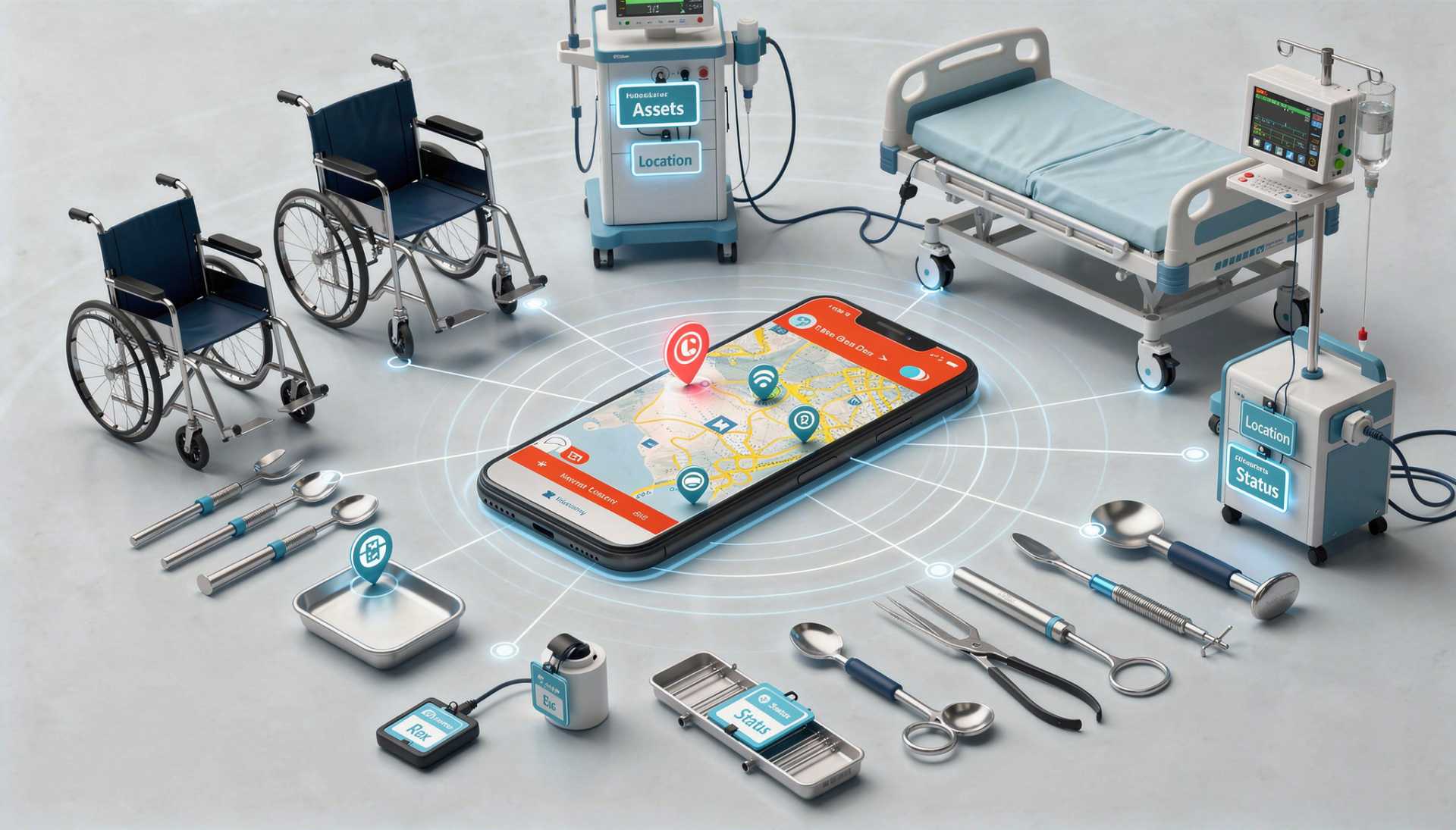
3. Asset & Inventory Management
Hospitals manage thousands of high-value assets, including infusion pumps, ventilators, wheelchairs, imaging equipment, medications, and medical waste.
IoT asset tracking enables:
- Real-time visibility of equipment location
- Reduced asset loss and theft
- Faster equipment availability for patient care
- Optimized inventory and procurement
Using multi-carrier IoT SIMs, tracking devices remain connected across basements, parking structures, and multiple buildings, where Wi-Fi coverage often fails.
4. Telehealth & Telemedicine
Telehealth has become a permanent component of modern healthcare, supporting:
- Remote consultations and diagnostics
- Home-based care
- Mobile clinics
- Emergency response units
Reliable connectivity is critical for video, diagnostics data, and real-time communication.
Multi-carrier IoT platforms provide:
- Network redundancy for uninterrupted consultations
- Secure, private data transmission
- Coverage in remote or mobile environments
This connectivity foundation also supports advanced use cases such as remote robotic surgery, where latency and reliability are mission-critical.
5. Operational Efficiency & Automation
Healthcare organizations face rising costs, staff shortages, and administrative burden.
IoT helps automate:
- Data collection from medical devices
- Routine monitoring tasks
- Equipment usage tracking
- Environmental compliance reporting
With centralized IoT connectivity management, providers can:
- Reduce manual processes and errors
- Lower operational costs
- Improve staff productivity
- Focus resources on patient care
How Multi-Carrier IoT Platforms Work in Healthcare
Multi-Network SIMs & eSIMs
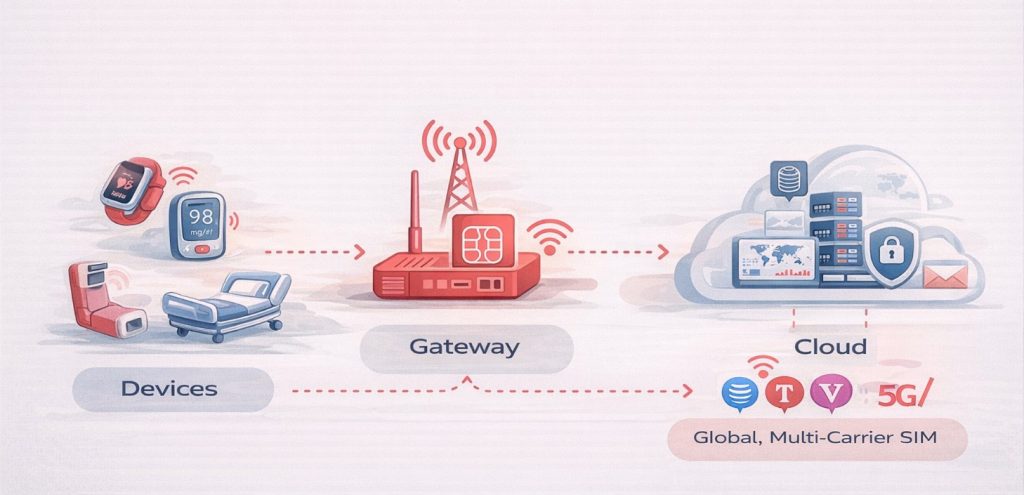
Healthcare devices are equipped with multi-carrier SIMs or eSIMs that can dynamically connect to the strongest available network, such as AT&T, Verizon, T-Mobile, or regional carriers.
If one network degrades or fails, the device automatically switches to another, maintaining continuous connectivity without manual intervention.
Guaranteed Uptime for Critical Devices
This automatic network switching is essential for:
- Vital signs monitors
- Life-supporting medical devices
- Emergency response equipment
- Mobile care units
Multi-carrier platforms eliminate single points of failure, ensuring always-on connectivity for life-critical systems.
Enhanced Security & Compliance
Healthcare IoT connectivity benefits from cellular “drop-in networking,” which:
- Keeps devices off public Wi-Fi networks
- Reduces attack surfaces
- Simplifies network segmentation
- Supports encrypted data transmission
This is especially important for protecting sensitive patient data and supporting regulatory compliance frameworks such as HIPAA and GDPR.
Global Reach & Scalability
Multi-carrier platforms allow healthcare providers to:
- Deploy devices globally with a single connectivity partner
- Support international health initiatives and vaccine tracking
- Manage thousands of devices from one centralized dashboard
- Scale rapidly without renegotiating carrier contracts
Key Benefits of IoT in Healthcare with Multi-Carrier Connectivity
- Improved patient outcomes through continuous monitoring
- Reduced hospital readmissions and costs
- Expanded access to care in rural and remote regions
- Higher operational efficiency and asset utilization
- Stronger security posture for medical IoT
- Simplified global device management
Why IoT-Driven Healthcare Connectivity Matters
Healthcare is shifting from reactive treatment to proactive, data-driven care. IoT makes this possible, but only if devices remain reliably connected.
Global multi-carrier IoT platforms like Fidelitel provide the resilient, secure, and scalable connectivity foundation healthcare organizations need to deliver continuous care, protect patients, and operate efficiently in an increasingly connected world.
Final Thought
In healthcare, connectivity is not infrastructure, it is clinical capability. By leveraging multi-carrier IoT connectivity, healthcare providers can extend care beyond hospital walls, improve outcomes, reduce costs, and ensure that critical medical data is always available when it matters most.