Choosing the wrong connectivity technology can cost IoT deployments millions in downtime, battery replacements, and infrastructure redesign.
As global IoT deployments scale across industries, from agriculture sensors and logistics trackers to smart utilities, the decision between LTE-M and NB-IoT has become one of the most important technical choices organizations must make.
Both technologies were developed under global cellular standards from the 3rd Generation Partnership Project and promoted by the GSM Association as part of the cellular IoT ecosystem.
But despite their similarities, they serve very different deployment scenarios.
In this guide, we explain:
- What LTE-M and NB-IoT actually are
- How they differ technically
- Which technology works best for remote deployments
- Real-world IoT use cases
- How enterprises choose the right LPWAN strategy
Why This Decision Matters for IoT Deployments
Connectivity is the backbone of any IoT solution. A poor network choice can lead to:
- Device battery drain
- Signal coverage failures
- Expensive firmware update challenges
- Increased operational costs
In remote environments, such as farms, rural infrastructure, or industrial facilities, the wrong connectivity model can mean devices going offline for days or weeks.
That’s why understanding LTE-M and NB-IoT is essential before scaling IoT deployments.
What Is LTE-M?
LTE-M (Long Term Evolution for Machines), also known as Cat-M1, is a low-power cellular technology designed for IoT devices that require:
- Moderate data transmission
- Mobility support
- Low latency communication
- Firmware-over-the-air updates
Unlike traditional LTE designed for smartphones, LTE-M reduces bandwidth usage to make devices more efficient and affordable while still enabling reliable connectivity.
Key LTE-M Features
- Data speeds up to approximately 1 Mbps
- Seamless mobility between cell towers
- Support for voice capability (VoLTE)
- Efficient firmware updates
- Lower latency than NB-IoT
These features make LTE-M ideal for IoT devices that move or transmit data more frequently.
What Is NB-IoT?
NB-IoT (Narrowband Internet of Things) was built specifically for ultra-low power and static devices.
It uses extremely narrow bandwidth to maximize signal penetration and battery life.
Key NB-IoT Features
- Very low power consumption
- Data rates around 250 kbps
- Strong indoor and underground coverage
- Long battery lifespan (often 10+ years)
NB-IoT excels in environments where devices rarely move and only send small amounts of data.
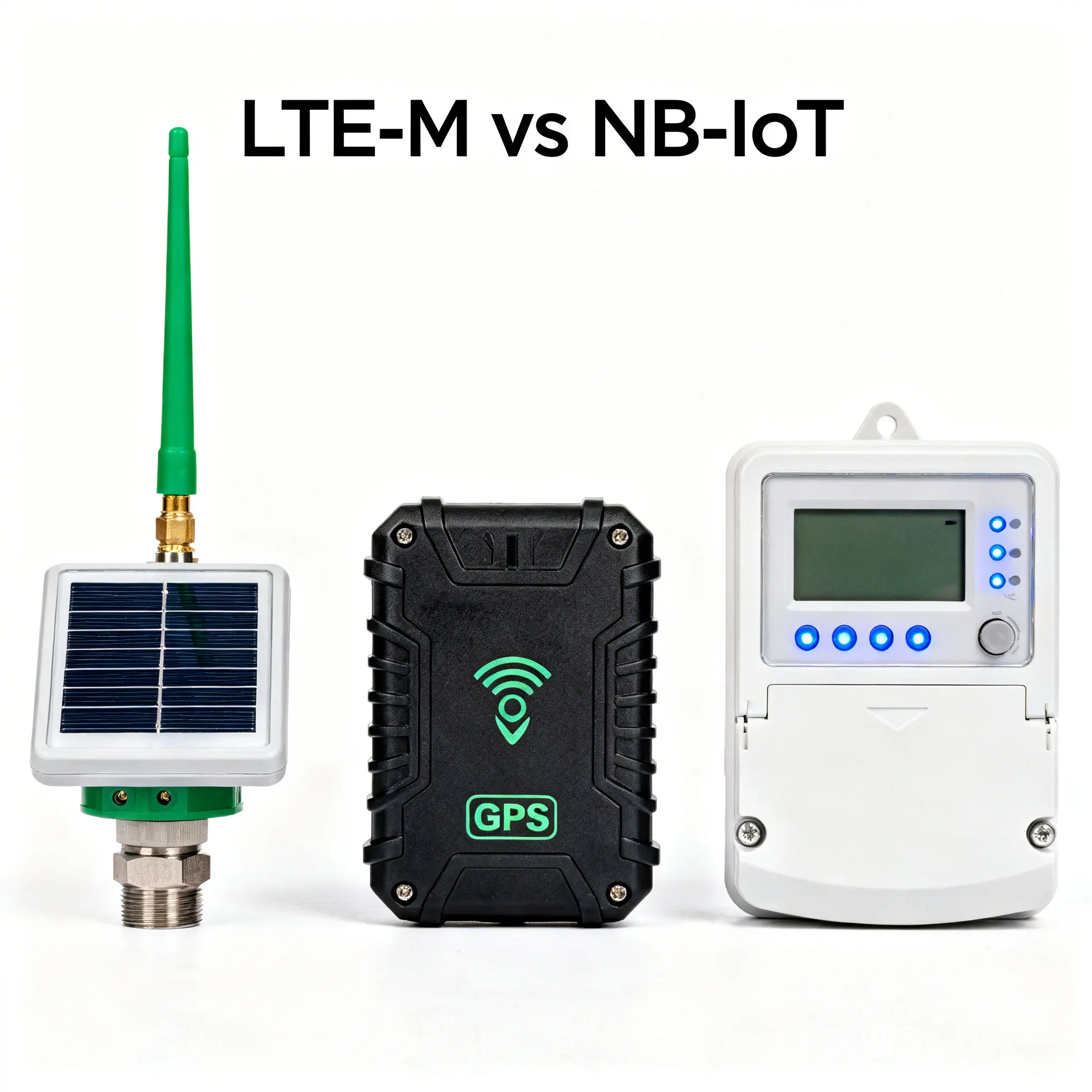
LTE-M vs NB-IoT: Key Differences
Understanding the technical differences between these technologies helps organizations choose the right solution.
| Feature | LTE-M | NB-IoT |
|---|---|---|
| Bandwidth | 1.4 MHz | 200 kHz |
| Max Data Rate | ~1 Mbps | ~250 kbps |
| Mobility Support | Yes | Limited |
| Latency | Lower | Higher |
| Firmware Updates | Efficient | Slower |
| Power Efficiency | High | Very High |
| Indoor Penetration | Good | Excellent |
| Voice Support | Yes | No |
| Ideal Use Case | Mobile devices | Static sensors |
In short:
- LTE-M prioritizes flexibility and mobility
- NB-IoT prioritizes efficiency and coverage
Coverage: Which Works Better in Remote Areas?
Coverage performance becomes critical when devices operate far from dense urban infrastructure.
NB-IoT Coverage Advantage
NB-IoT can reach:
- Underground facilities
- Deep indoor installations
- Rural infrastructure
This makes it ideal for devices such as:
- Water meters
- Agricultural sensors
- Environmental monitoring systems
LTE-M Coverage Strength
LTE-M offers broader compatibility with global LTE networks and often benefits from stronger roaming agreements.
For deployments across cities or countries, LTE-M may provide more consistent connectivity.
Battery Life Comparison
Battery replacement is often the largest operational cost in IoT deployments.
NB-IoT has a clear advantage for static devices because it minimizes network communication and supports extended sleep cycles.
Many NB-IoT sensors can operate for a decade on a single battery.
LTE-M devices still maintain strong efficiency but consume slightly more energy due to higher data throughput and mobility capabilities.
Mobility: The Major Advantage of LTE-M
One of the biggest differences between the two technologies is device mobility.
LTE-M Supports
- Seamless network handovers
- Devices moving between regions
- Real-time asset tracking
NB-IoT Is Best For
- Fixed sensors
- Static infrastructure
- Monitoring systems that rarely move
For logistics, fleet management, or wearable technology, LTE-M is usually the better choice.
Firmware Updates and Device Maintenance
IoT devices often require remote updates for:
- Security patches
- Feature upgrades
- Compliance changes
LTE-M handles these updates more efficiently due to higher throughput.
NB-IoT devices can perform firmware updates but the process can take significantly longer.
Real-World IoT Use Cases
Different industries benefit from different technologies.
Smart Agriculture
- NB-IoT is ideal for soil sensors and irrigation monitoring systems.
- LTE-M works better for tracking agricultural machinery or livestock.
Asset Tracking
Shipping containers and moving equipment rely on LTE-M due to mobility requirements.
Smart Utilities
Electricity and water meters often rely on NB-IoT due to their static location and long battery life needs.
Healthcare Devices
Wearables and connected medical devices benefit from LTE-M because they require mobility and reliable data transmission.
Cost Considerations
While module pricing varies by manufacturer, NB-IoT devices typically have slightly lower hardware costs.
However, cost comparisons should consider the entire lifecycle:
- Battery replacement
- Network reliability
- Device maintenance
- Firmware update efficiency
In many cases, the connectivity technology that appears cheaper initially may become more expensive over time.
The Future of Cellular IoT Networks
Both LTE-M and NB-IoT remain core components of the global cellular IoT roadmap.
Standards bodies like the 3rd Generation Partnership Project continue evolving these technologies alongside emerging 5G infrastructure.
Rather than replacing one another, LTE-M and NB-IoT will likely continue serving complementary roles in the IoT ecosystem.
When Should You Choose LTE-M?
LTE-M is best suited for:
- Mobile IoT devices
- Real-time communication needs
- Firmware update heavy deployments
- Wearables and fleet tracking
When Should You Choose NB-IoT?
NB-IoT works best for:
- Static sensors
- Low data transmission environments
- Deep indoor coverage needs
- Long battery life deployments
The Most Effective Strategy: Hybrid Connectivity
Many enterprises deploy both LTE-M and NB-IoT depending on device type and location.
Modern IoT connectivity platforms allow organizations to manage multiple connectivity options while maintaining centralized control and resilience.
This approach reduces operational risk and ensures devices remain connected even in complex environments.
Final Thoughts
As IoT adoption accelerates globally, connectivity decisions are becoming foundational infrastructure choices rather than simple technical preferences.
LTE-M and NB-IoT each bring powerful advantages to the table.
Understanding their strengths, and aligning them with the specific needs of your devices, can dramatically improve the success and longevity of IoT deployments.
Organizations planning large-scale IoT initiatives should evaluate connectivity technologies not only for cost and performance but also for long-term scalability and resilience.