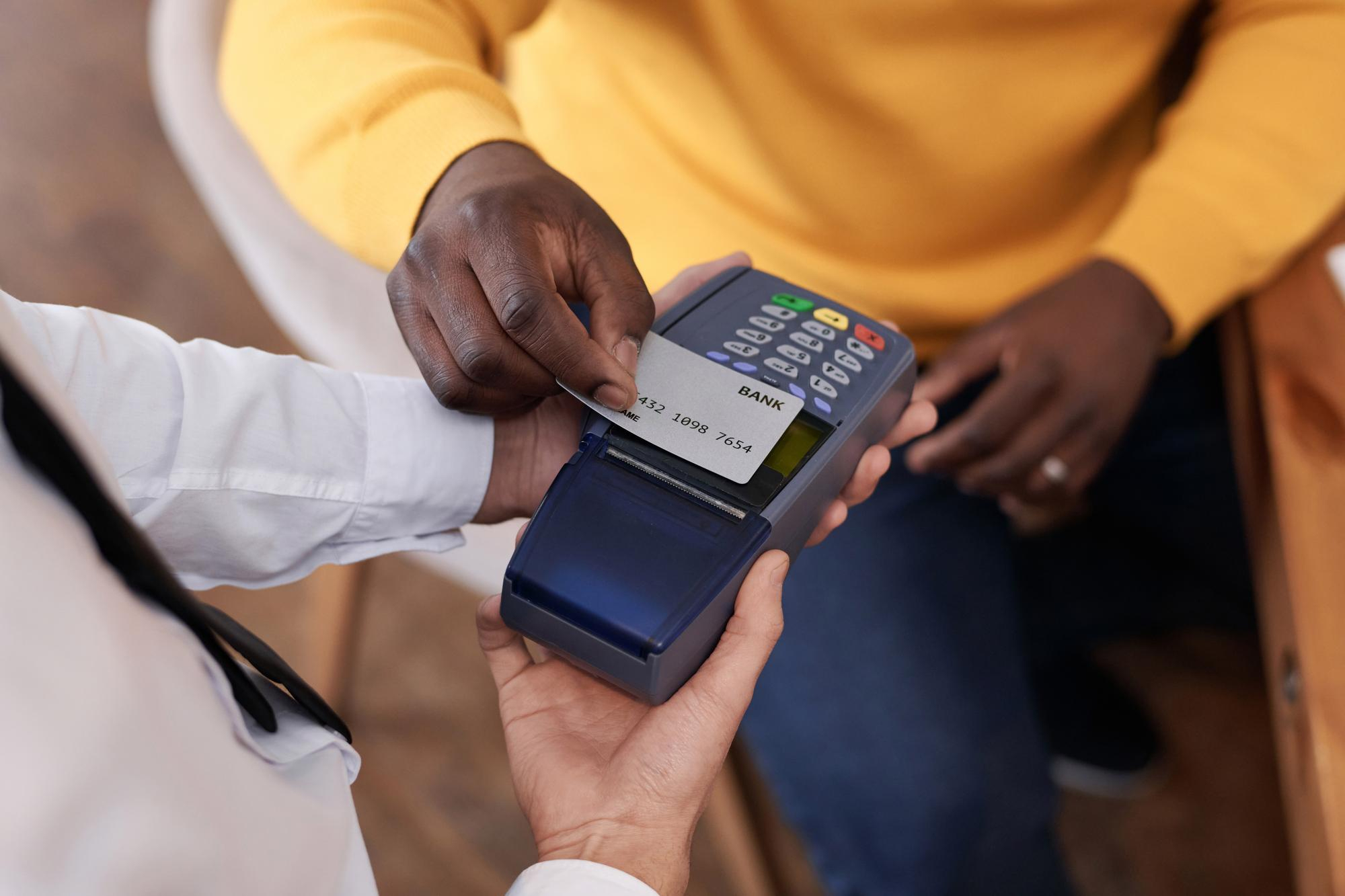
Africa’s digital payments market is expanding rapidly, from urban retail hubs in Lagos to township merchants in Johannesburg and rural trade corridors across Kenya, Nigeria, Ghana, and Tanzania.
But while payment adoption is accelerating, connectivity infrastructure remains fragmented, inconsistent, and costly. For Point-of-Sale (POS) terminals, connectivity is not just a feature, it is the business itself. When the network fails, revenue stops.
This is why Multi-IMSI and eUICC technology are becoming critical infrastructure layers for African POS deployments. Together, they enable near 100% uptime, higher transaction approval rates, and seamless cross-border connectivity, without dependence on a single carrier.
This article explores:
- Why single-carrier POS connectivity fails in Africa
- How Multi-IMSI technology ensures redundancy
- How eUICC enables remote provisioning and compliance
- Real-world results from African fintech deployments
- Why combining both technologies is the future of POS infrastructure
The Connectivity Problem Facing POS Systems in Africa
1. Coverage Gaps & Network Downtime
No single mobile network operator covers an entire African country reliably, let alone the continent. Even within major economies such as Nigeria or South Africa, coverage varies dramatically between urban and rural regions.
If a POS terminal depends on a single carrier:
- Network outage = complete transaction failure
- Signal degradation = slow approvals
- Congestion = declined payments
For merchants, this means lost sales and damaged customer trust.
2. High Data Costs & Congestion
Mobile data in Sub-Saharan Africa remains among the most expensive relative to income globally. Businesses relying on a single provider cannot dynamically optimize for cost or performance.
Single-network congestion often leads to:
- Delayed authorization responses
- Timeout errors
- Duplicate payment attempts
- Card declines due to latency
3. The “Trombone Effect” & High Latency
When POS terminals roam via a single home network profile, data frequently travels back to the SIM’s home country before reaching payment gateways. This routing loop, often called the “trombone effect”, increases latency dramatically.
For real-time payments, even a few extra seconds can:
- Cause customer frustration
- Trigger transaction timeouts
- Reduce approval rates
4. Operational & Logistical Complexity
Deploying POS terminals across multiple African countries traditionally requires:
- Separate SIM contracts per country
- Multiple carrier negotiations
- Different SKUs
- Separate billing systems
- Physical SIM replacements
For fintech companies scaling regionally, this becomes a logistical nightmare.
The Solution: Multi-IMSI Technology
Multi-IMSI (Multiple International Mobile Subscriber Identities) allows a single SIM card to store multiple network identities. This enables automatic carrier switching in real time.
How Multi-IMSI Works
A Multi-IMSI SIM:
- Detects signal strength and network quality
- Automatically switches to the strongest available operator
- Fails over instantly if the primary network goes down
The switch is seamless and requires no manual intervention.
Key Benefits for African POS Systems
1. Maximum Uptime & Reliability
If one network fails, the SIM instantly connects to another.
Result:
- Continuous payment processing
- Reduced downtime
- Near 100% uptime in multi-operator regions
This redundancy is essential in markets where outages are common.
2. Improved Transaction Approval Rates
By dynamically selecting the best-performing network at any given moment, POS devices experience:
- Lower latency
- Faster authorization
- Fewer timeout declines
In real deployments across Southern Africa, one fintech provider significantly improved transaction success rates after adopting Multi-IMSI for its card readers.
3. Improved Coverage in Remote Areas
In rural and peri-urban regions:
- Network A may be strong 2km away
- Network B may dominate in a nearby town
Multi-IMSI allows the POS device to connect to whichever signal is strongest at that exact location.
This is critical for:
- Informal traders
- Agricultural supply chains
- Mobile merchants
- Transport corridors
4. Cost Optimization Through Local Breakout
Instead of permanent roaming, Multi-IMSI can switch to local network identities, enabling:
- Local data pricing
- Reduced roaming fees
- Lower operating costs
The Role of eUICC: Remote, Flexible & Future-Proof Connectivity
While Multi-IMSI ensures immediate failover, eUICC enables long-term adaptability.
eUICC (embedded Universal Integrated Circuit Card) is the standard that allows SIM profiles to be downloaded, updated, or changed over-the-air (OTA), without physically replacing the SIM.
eUICC Standards Used for POS Terminal Provisioning
Enterprise POS terminals typically rely on the GSMA M2M eUICC specification (SGP.02), developed by the GSM Association. This standard is designed specifically for machine-to-machine (M2M) and IoT deployments where devices are centrally managed, making it ideal for payment terminals that require remote SIM provisioning without user involvement.
However, the industry is gradually transitioning toward the newer GSMA IoT eSIM specification (SGP.32), which introduces a more flexible, cloud-native architecture better suited for globally distributed POS fleets. Unlike SGP.02, SGP.32 simplifies remote profile downloads and multi-operator orchestration at scale.
The consumer eSIM specification (SGP.22), widely used in smartphones, is generally not deployed in POS environments because it relies on user-driven activation mechanisms such as QR code provisioning.
Benefits of eUICC for African POS Deployments
1. Remote Provisioning
Operators can:
- Add new carrier profiles remotely
- Change connectivity providers OTA
- Deploy updates without touching the device
This is crucial when devices are distributed across remote villages or multiple countries.
2. Regulatory Compliance
Some African regulators restrict permanent roaming. eUICC allows:
- Downloading a compliant local operator profile
- Switching to a local network identity
- Remaining compliant without hardware changes
3. Logistics Simplification
Instead of managing separate SIM inventories for:
- Kenya
- Nigeria
- Uganda
- Ghana
Businesses can deploy a single global eUICC SIM SKU.
This reduces:
- Warehousing costs
- Vendor complexity
- Deployment delays
4. Future-Proofing POS Hardware
As African networks sunset 3G and expand 4G/5G:
eUICC ensures:
- Devices can adapt to new operator profiles
- No physical SIM swaps required
- Longer hardware lifecycle
Case Study: African Fintech Connectivity Transformation
A leading South African fintech company faced recurring connectivity issues with its POS card readers:
- Single-network outages
- Transaction failures
- Inconsistent rural coverage
After implementing Multi-IMSI connectivity:
- Uptime improved dramatically
- Transaction approval rates increased
- Customer complaints decreased
- Merchant churn reduced
The company gained a competitive edge simply by making connectivity invisible and reliable.
Why Combining Multi-IMSI + eUICC Is Critical
Individually, each technology provides advantages.
Combined, they deliver:
| Multi-IMSI | eUICC |
|---|---|
| Real-time failover | Remote profile management |
| Automatic network switching | OTA provisioning |
| Immediate redundancy | Regulatory flexibility |
| Stronger signal selection | Long-term scalability |
Together, they create a resilient, intelligent connectivity layer tailored for Africa’s infrastructure realities.
How Multi-IMSI and eUICC Work Together
Combined, these technologies deliver:
| Capability | Benefit |
|---|---|
| Automatic network switching | Uptime & continuity |
| OTA profile updates | Remote provisioning |
| Multi-carrier access | Cost optimization |
| Regulatory compliance support | Cross-border expansion |
| Single hardware SKU | Inventory simplification |
| Cloud-native management | Scalability & agility |
POS devices with Multi-IMSI and eUICC no longer depend on physical SIM swaps or single-carrier constraints. Devices adapt in real-time and evolve over time through OTA updates.
Strategic Impact for African Payment Ecosystems
By adopting Multi-IMSI and eUICC technology, POS providers can achieve:
- Near 100% Uptime — Automatic network failover eliminates single points of failure.
- Higher Transaction Success Rates — Better routing = faster approvals = more completed sales.
- Lower Operational Costs — Local breakout and remote provisioning reduce roaming and logistics expenses.
- Faster Regional Expansion — One SIM platform works across multiple countries.
- Improved Merchant Trust — Reliable connectivity builds long-term brand loyalty.
The Future of POS Connectivity in Africa
Africa’s payments revolution cannot rely on fragile connectivity models. As digital commerce grows across:
- Retail
- Transportation
- Healthcare
- Smart agriculture
- Informal markets
Connectivity must evolve from single-carrier dependence to intelligent multi-network orchestration.
Multi-IMSI and eUICC technology provide the redundancy, flexibility, and scalability required for Africa’s diverse infrastructure landscape.
For POS providers seeking higher uptime, stronger approval rates, and cost-efficient expansion, these technologies are no longer optional, they are foundational.