How IoT, AI, and Smart Connectivity Are Powering the 4TH Industrial Revolution
What Is Industry 4.0?
Industry 4.0, often called the Fourth Industrial Revolution, represents the next phase of industrial evolution, where physical manufacturing processes are deeply integrated with digital technologies. Unlike previous industrial eras that focused on mechanization, electricity, or basic automation, Industry 4.0 is defined by connected, intelligent, and autonomous systems.
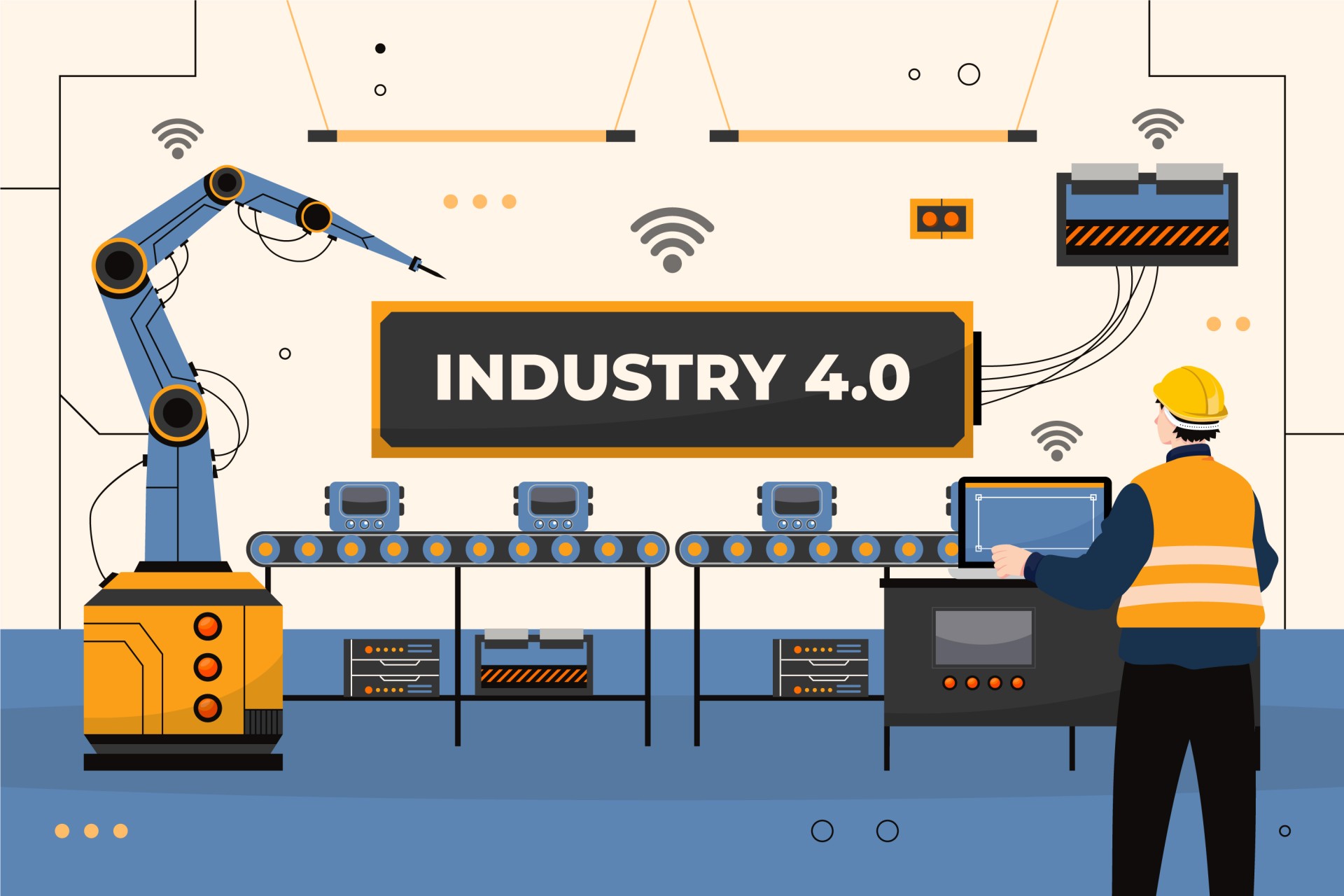
At its core, Industry 4.0 brings together technologies such as the Industrial Internet of Things (IIoT), artificial intelligence (AI), machine learning (ML), big data analytics, cloud computing, and advanced automation to create smart factories. These environments enable machines, systems, and people to exchange data in real time, analyze conditions continuously, and make informed decisions with minimal human intervention.
For manufacturers, Industry 4.0 is not a single technology upgrade, it is a fundamental transformation of how factories operate, compete, and scale in a global, data-driven economy.
A Brief History: From Industry 1.0 to Industry 4.0
- First Industrial Revolution (Industry 1.0)
By the early 1800s, the invention of the steam engine transformed production. Human and animal labor were gradually replaced by mechanized systems, enabling larger-scale manufacturing and the rise of early factories. - Second Industrial Revolution (Industry 2.0)
In the late 19th and early 20th centuries, electricity and petroleum reshaped industry. Assembly lines, mass production, and standardized processes dramatically increased output and reduced costs, many of these principles still underpin manufacturing today. - Third Industrial Revolution (Industry 3.0)
Beginning in the mid-20th century, computers, electronics, and robotics entered factories. This era introduced programmable logic controllers (PLCs), early automation, and computerized business systems for managing production data. - Fourth Industrial Revolution (Industry 4.0)
Today, manufacturing is powered by information and intelligence. Massive volumes of data flow continuously from machines, suppliers, customers, and global operations. AI systems analyze this data in real time to predict failures, optimize workflows, and drive autonomous decision-making.
Industry 4.0 is not defined by one breakthrough, it is defined by the seamless integration of digital and physical systems at scale.
Key Concepts and Technologies Behind Industry 4.0
- Smart Factories
Smart factories are highly connected environments where machines, sensors, and systems communicate continuously. They can self-optimize, self-diagnose issues, and adapt to changes in demand or conditions with minimal manual input. - Cyber-Physical Systems (CPS)
CPS combine physical machinery with digital intelligence. Sensors monitor real-world conditions, while software models and analytics systems interpret data and issue commands back to machines. - Industrial Internet of Things (IIoT)
IIoT refers to networks of connected sensors, devices, and machines embedded across industrial environments. These devices collect data on temperature, vibration, pressure, energy usage, and performance, forming the data foundation of Industry 4.0. - Big Data and Advanced Analytics
Industry 4.0 environments generate vast amounts of structured and unstructured data. Advanced analytics platforms process this data to uncover patterns, predict outcomes, and optimize production in real time.
Artificial Intelligence (AI) and Machine Learning (ML)
AI and ML enable systems to learn from historical and real-time data. In manufacturing, this powers predictive maintenance, automated quality inspections, demand forecasting, and continuous process improvement.
Cloud Computing
Cloud platforms provide the scalable infrastructure needed to store, process, and analyze industrial data across multiple sites and geographies. They also enable centralized visibility and control.
Digital Twins
A digital twin is a virtual representation of a physical asset, machine, or process. By simulating real-world behavior, manufacturers can test scenarios, optimize performance, and prevent failures without disrupting operations.
How Industry 4.0 Works: A Practical Example
Consider a modern production line operating under Industry 4.0 principles:
- IIoT sensors installed on machines continuously measure temperature, vibration, speed, and energy consumption.
- Sensor data is transmitted securely to a cloud platform using reliable industrial connectivity.
- AI algorithms analyze the data in real time and compare it against a digital twin of the equipment.
- The system detects early signs of abnormal vibration that indicate potential bearing failure.
- Maintenance is automatically scheduled, or machine parameters are adjusted to prevent damage—avoiding unplanned downtime.
- Production continues smoothly, quality remains consistent, and operational costs are reduced.
This closed-loop system—data, analysis, action—is the essence of Industry 4.0.
Manufacturing 4.0 Solutions in Action
Industry 4.0 is already delivering measurable value across industrial sectors:
- Predictive Maintenance
IoT sensors detect early warning signs of equipment wear, allowing maintenance teams to act before failures occur, reducing downtime and extending asset life. - Smart Quality Control
AI-powered vision systems inspect products in real time, identifying defects faster and more accurately than manual checks. - Energy Optimization
Connected meters and analytics platforms monitor energy usage across facilities, enabling smarter load management and sustainability initiatives. - Flexible Production
Smart factories can rapidly adjust production schedules, product configurations, and workflows to meet changing customer demand. - Supply Chain Visibility
Connected assets and systems provide real-time insight into inventory levels, logistics performance, and supplier reliability.
Why Connectivity Is Critical to Industry 4.0
None of these capabilities function without reliable, secure, and always-on connectivity. Industry 4.0 environments depend on uninterrupted data flow between machines, platforms, and decision systems, often across multiple sites and countries.
This is where industrial IoT connectivity platforms, like those offered by Fidelitel, play a foundational role:
- Ensuring machines remain connected even during network outages
- Supporting large-scale sensor deployments across factories and regions
- Enabling secure, low-latency data transmission for real-time control
- Simplifying global operations with centralized connectivity management
Without resilient connectivity, smart factories cannot function as intended.
Key Benefits of Industry 4.0 (Summary)
- Increased Productivity and Efficiency
Optimized processes, fewer bottlenecks, and reduced downtime. - Greater Flexibility and Agility
Faster response to market changes and customized production. - Improved Quality Control
AI-driven inspections and continuous monitoring reduce defects. - Smarter Decision-Making
Real-time, data-driven insights replace reactive management. - Lower Operational Costs
Predictive maintenance, energy optimization, and automation reduce waste.
Industry 4.0 Is the Future of Manufacturing
Industry 4.0 is no longer a future concept; it is a competitive necessity. Manufacturers that embrace connected, intelligent systems gain resilience, efficiency, and insight that traditional operations cannot match.
As factories become smarter and more distributed, reliable global IoT connectivity becomes just as important as machines and software. Industry 4.0 succeeds when data flows continuously, securely, and intelligently, turning information into action.
Fidelitel supports Industry 4.0 initiatives with global, multi-network IoT connectivity designed for industrial-grade reliability, security, and scale, helping manufacturers build the smart factories of today and tomorrow.